Tuesday, March 22, 2016

Literacy: Are Today's Youth Digital Natives?


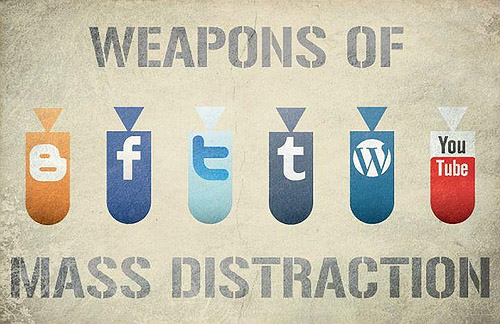
Danah Boyd's chapter Literacy: Are Today's Youth Digital Natives? tells an informative summary of how today's society is divided because of technology.  Her intro to the chapter speaks about how teens have grown up in a world where internet has always existed, and that from this perspective, "teens are 'digital natives', and adults, supposedly less knowledgable about technology and less capable of developing these skills, are 'digital immigrants'".  However, these teens and students are not interested in learning through the use of technology, rather, they are engulfed in a social media world.  Hence, this term of being a "digital native" is more so a distraction than it is a useful trait.  While there are of course teens that Boyd has interacted with that use their knowledge in technology in appropriate and productive ways, there are also teens that are strictly familiar with social media and can not distinguish spam, or the difference between a web browser and the internet.  Because of this, Boyd argues that is dangerous to assume that youth are automatically informed, while it also naive to assume that "digital immigrants" have nothing to offer, etc.

The Emergence of the Digital Native
John Perry Barlow, a renowned poet and cyberlibertarian, positioned those who "come from Cyberspace" in juxtaposition with those before this time, dubbed them the "native" against the "immigrant".  Douglas Rushkoff then argued in his book that children should be recognized for their ingenuity.  On this hand, Rushkoff uses the terms "native" and "immigrant" to celebrate children's development in the digital age.  Boyd challenges both perspectives, saying that both you and adults still have a lot to learn.
 "We live in a technologically mediated world. Being comfortable using technology is increasingly important for everyday activities: obtaining a well-paying job, managing medical care, engaging with government. Rather than assuming that youth have innate technical skills, parents, educators, and policymakers must collectively work to support those who come from different backgrounds and have differ- ent experiences. Educators have an important role to play in helping youth navigate networked publics and the information-rich environ- ments that the internet supports. Familiarity with the latest gadgets or services is often less important than possessing the critical knowl- edge to engage productively with networked situations, including the ability to control how personal information flows and how to look for and interpret accessible information."


 Youth Need New Literacies
Boyd goes on to speak about how youth must become media literate. They need to develop the skills to ask themselves questions about the construction and dissemination of particular media artifacts.   They need to understand the reasoning behind marketing and advertising, and how computer systems work.  It is important for the youth to learn these, rather than how to complete their MySpace layouts, for basic functioning in today's work force and employment.

The Politics of Algorithms
Boyd brings up the example of Wikipedia vs. Google; that Wikipedia is a community source that any one is able to edit, and that most information is from their own beliefs or other sites that are not credible, when Google, on the other hand, continuously alters their algorithms to minimize the efficacy of those trying to manipulate search results.  Algorithms are fundamental to how many computer systems work; it is important to recognize what algorithms are neutral in this case.

  It is important to educate youth on what sites and search engines they should be using and why.  Many students did not actually understand why their teachers did not want them using Wikipedia, for example, or they still used it regardless.  In this case, adults often end up giving teens misleading or inaccurate advice and information about what they see online.

Boyd explains that the problematic frame of the digital native often undermines efforts to celebrate and critically examine how teens do and do not engage with social media.   "I believe that the digital natives rhetoric is worse than inaccurate: it is dangerous. Because of how society has politicized this language, it allows some to eschew responsibility for helping youth and adults navigate a networked world. If we view skills and knowledge as inher- ently generational, then organized efforts to achieve needed forms of literacy are unnecessary. In other words, a focus on today’s youth as digital natives presumes that all we as a society need to do is be patient and wait for a generation of these digital wunderkinds to grow up. A laissez-faire attitude is unlikely to eradicate the inequalities that con- tinue to emerge. Likewise, these attitudes will not empower average youth to be more sophisticated internet participants. " 

Teens are gaining experience and knowledge of technological skills through use of social networking and media, however, they also need the education from adults and "digital immigrants" on how to use such skills and where to apply them appropriately.  Technology will increasingly play an important role in society, therefore it is very important in our youth and future generations. 


Thursday, March 10, 2016

We Begin to Know Each Other

While navigating around the Rethinking Schools website, which has an overwhelming amount of exceptional information, resources, and articles, I found one article that I was more intrigued to read than others.  The summary of We Begin to Know Each Other by Maiya Jackson caught my eye and left me wanting to hear the rest of it.
The article is primarily about an 8th grade girl named Laura, who was born a boy.  Laura applied for Manhattan Country School (where Maiya Jackson is director) upon entering the 8th grade because she was being pressured to leave her current school after making the decision to become a girl.  Not ready to deal with the questions that would arise from the community, Laura's current school asked her to leave when she made this decision.
This was the baseline that was explained in the brief summary prior to reading the full article.  While I can imagine that the topic of transgender can be quite a complex one for staff and families of such a young age group,  I could not believe that a school took the initiative to ask this child to leave.  This child had undoubtedly struggled with her identity for all of her life thus far, and had made a bolder and braver decision than many adults have in their own lives to change that.  This is so impressing to me that a child this young can be sure enough to make such an aggressive, and assuringly scary, choice on their own.
Manhattan Country School (MCS), the school Laura would be transferring in, "is a pre-K to 8th grade progressive school in New York City with a social justice mission.  Our student body has no racial majority, and we have a sliding-scale tuition system that supports socio-economic diversity".  The admissions team wanted to trust that the school would be safe and welcoming place for Laura, but was unsure how the wider school community would be in regards to talking openly about transgender identity.  While reading how the community and school felt, I found myself relating it back to the students transferring into Frances Howell in This American Life.  While very different identities, it is seemingly the same situation of bringing students in to a school that may make current students and families feel uncomfortable, but also wanting to make the new students feel safe and welcome.
The mission of MCS is proven throughout the article many times, but mainly because of the way Laura found MCS.  She had found it by attending Cometfire, a citywide group for LGBTQ middle school students and their allies (love that this is a thing there).  There, Laura became friendly with an 8th grader, Sophia, that had been out as a lesbian since the 5th grade.  Again, as a side note, I was very impressed that a child had come out by that age.  I feel that goes to show how serious gender identity can be, and that these children so obviously know this all of their lives (see related video link at end of blog).
After the admissions team met with the school psychologist to talk about Laura's adjustment and how to support her, she entered the 8th grade class that already had three gay families; "Sophia had already blazed a path to talk about gender and sexuality.  The class's 6th grade activism project had been lobbying for marriage equality at a state senator's office; their 7th grade project was leading a campaign to stop bullying of LGBTQ students".  These points that show how unbiased and welcoming this school is is absolutely amazing to me.  This is exactly how schools today need to be, and I wonder how Delpit and the other authors of the readings we have previously done would react to such an outstanding body of students and staff.
As the school prepared for Laura's welcoming and the new school year, Sophia's mother wrote an e-mail in regards to Sophia's gender as well.  She had attended a gender nonconforming camp for kids that summer, and made a transition to being called 'SJ' and living in a masculine spectrum.  It was very meaningful to her, and SJ wanted to continue his transition identity that year school.  Another thought provoking situation for me, because I could not help but respect that this parent was so supportive and open to their child's identity transition, especially at an age where many children do not still know themselves, and go through many phases.
Upon these situations, the school found themselves wondering how to deal with certain situations, such as gender bathrooms.  They opted for hanging signs on the door that said "occupied" when students were using them, rather than having a girls room and a boys room.  They did not want to have only locked unisex bathrooms, because of the potential safety hazard of students locking themselves in bathrooms.
The staff spent much time discussing this with each other and their students, and even did staff development sessions on gender identity and writing exercises of the first time when they were aware of their gender (I found myself briefly thinking of this as well, and finding it rather hard!).  The staff would tell their students on the first day of school while making opening remarks for the school year. They talked about the importance of community, and introduced SJ, who all the students were already familiar with as Sophia.  At first, Maiya reported that the students were rather open and accepting of Laura and SJ.  However, as the school year went on, there were minor issues and confusion for the students attending school with Laura and SJ.  Students brought up issues such as sports, and how they felt Laura playing on a girls team was an unfair advantage having been born a boy.  Some brought up overnight field trips, and how it was going to work gender wise.  The 8th grade girls apparently kept asking a 7th grade girl why she was interested in dating SJ, because he was a "boy" and had a crush on her, implying that she was a bad friend for not choosing to go out with him.  All of these confusing issues with staff and students brought me back to when Allan Johnson said that "people fear the unfamiliar".  At the beginning, everyone seemed fine with it.  As time went on, and questions arose, and the students and staff could not justify their questions with answers for themselves because they were unfamiliar with the situation, they seemed to start that fear he speaks of.  The staff held several meetings throughout the year, and had started with written questions from the students. It seemed the sessions were helpful, however, while reading the end of the article, I believe the most effective strategy for the students dealing with these confusing issues was to hear from Laura herself.  Laura gave a talk to the 7th and 8th grade students at the end of the year, and I felt it even put things in perspective for me.  She explains that she has always been a girl, stuck in a boy's body.  "I want all of you to close your eyes and imagine seeing yourself in the mirror, but instead of seeing yourself as your biological sex, imagine you are the opposite sex..now open your eyes. Some may have liked the image they saw and some may have not.  If you did not like the image you saw, imagine what it would be like to live 11 years of your life as that image".  This quote is extremely powerful and I would love to refer back to it for anyone that may be confused or biased against transgenders.
I wanted to include this brief video on Jacob, a 5-year-old child that was born a girl and has already chosen to live as a boy.  I think it is very interesting to see a child at this age be so sure of his identity change, and it proves that children know this far before they even know what gender really is.

Sunday, February 21, 2016

Literacy With An Attitude

When first reading Patrick J. Finn's Literacy With An Attitude: Educating Working-Class Children in Their Own Self-Interest, I found myself thinking back to the Normandy schools that were discussed in the last week's audio.  I feel like Finn is the prototype teacher that should have been teaching in the Normandy school district when they began attempting to reform and improve it. The way he talks about motivating and educating the students in terms of "control" is perfect and logical.  "I had work assignments on the board when the students entered the classroom, and so there wasn't a moment when they didn't have anything to do.  I didn't say to an errant student 'what are you doing?' I said, 'stop that and get to work.' No discussion. No openings for an argument" (4).  This is simple, but a seemingly effective strategy with children; when there is opportunity for boredom, there is usually opportunity for poor behavior.  Likewise, including extra credit assignments is always motivating for such students as well; the work is not required or forced, so if they attempt it, it cannot hurt, but it there is a major chance it will help them.
I found the few pages dedicated to Anyon's studies of the working-class, middle-class, and affluent professional schools rather interesting, but not unexpected.  It seemed to be almost as I would expect from experience or observation myself, unfortunately.  I wonder what would come of the working-class and middle-class students if some educators from the affluent professional schools were placed in them.  "In the affluent professional school, work was not repetitious and mechanical, as it was in the working-class school; it was not knowing the correct answers, as it is was in the middle-class school; it was being able to manipulate what Anyon termed symbolic capital" (17).  The children in this school were able to answer what 'knowledge' is, make choices on their own, and think as an individual.  They understood answers and context of the material presented to them because it was taught in a passionate way, rather than "because the book says so".  One step further, the executive elite school was academic, intelligent, and rigorous. "In the executive elite school the children were developing a relationship to the economy, authority, and work that is different from all other schools. They learned grammatical, mathematical, and other vocabularies by which systems are described. They were taught to use these vocabularies to analyze and control situations. The point of school work was to achieve, to excel, to prepare for life at the top."
I couldn't agree more with Finn's argument that when students begin school in such different systems, the odds are set for them.  A student in the working-class school is not likely to excel in the same way as a student from the excel or elite schooling.  It is very sad, because many children in the working-class schools probably possess the necessary tools and skills to excel, but do not have the opportunity with such poor educators.  My favorite quote from this reading may very well be when Finn states, "I'd like to hope that a child's expectations are not determined on the day she or he enters kindergarten, but it would be foolish to entertain such a hope unless there are some drastic changes made" (25).
I thought Finn's writing was full of knowledge and information, however, it was definitely not as 'spicy' as our previous readings.  While I enjoyed the information he presented, I found it much easier and more engaging to read more opinionated and casual texts such as last week's audio, or such as Johnson's piece.

Friday, February 12, 2016

The Problem We All Live With

So far, The Problem We All Live With with Ira Glass and Nikole Hannah-jones was my favorite "reading" if you will.  While it was audio, I felt I took a lot more away from it, being so casual in conversation, and carrying so much history through various people's telling of their own stories.  I felt extremely engaged the entire time.
It is clear from the prologue and the first parts of Part I, that Nikole is very knowledgable and experienced in the subject of integration with students and why it works.  At first, I was somewhat questioning it, because sometimes, it is out of peoples' control of what school districts they live in.  However, once Nikole told her side of why it works from her own personal experiences as a child, I found myself strongly agreeing with her.
When Nikole spoke of Nedra Martin and her daughter, Mah'ria Martin, a star student from Normandy, the town and district in which Michael Brown lived, I was appalled.  It is truly sad to hear how much of a mess school systems can be, and that these children are almost set up for failure as soon as they enter them.  It is clear that such school systems need to have improved and educated teachers and administration hired immediately.  As if it is not clear enough, I think the fact that Mah'ria's case speaks loud enough in advocacy: the fact that she, at age 12, had thought ahead to bring her breakfast invitation because she was used to her school "screwing up".
I felt so happy to hear Mah'Ria talking of how welcoming the children and administration were at Francis Howell after the parents' committee meeting! Hearing her speak of her new friend Britney also was so heartwarming!  On the contrary, to hear Rihanna's story of being called a 'nigger' by a white child is heartbreaking.  The fact that these children were smart enough to walk away from such situations and speak so highly at such a young age is inspiring to me.
Listening to the exchange between Nikole and the most recent superintendent for Normandy, it gives me hope for the current and future students.  I think bringing in teachers to coach is a step, however, after hearing Nikole's multiple reasons and experiences through both her and all the students transferred to Francis Howell, I strongly agree that integration is the answer to these problems.  As I said before, this was very engaging and entertaining, and hearing it through children's perspectives and experiences was heartfelt and gave me a much better idea of situations rather than just reading about them through research or opinions.  It also gave me a better idea of the background of integration; and a little bit more knowledge to what I was questioning in my last blog post in regards to wondering if students and families in certain districts had "choices" of schools.  I would love to hear or read more from Nikole Hannah-Jones.
I have to say that it is quite ironic this is our reading for this week, following Beyonce's controversial halftime performance at the Super Bowl this past Sunday, a quiet political protest against police for a very similar situation that Nikole speaks of with Michael Brown.  As someone who was there live for the performance, I immediately thought of our discussions in this class, and have had so many thoughts on it. I thought to myself just how fitting this was for our class, and that had I not been enrolled in this class, it may have come as a more of a shock to me.  However, after this controversial performance, I have watched the rise of racism and anti-racism videos, posts, and blogs outpour from my social media networks.  I wanted to leave off my blog post with a very interesting article that a friend of mine, who is of color, posted last night on her Facebook wall.

Wednesday, February 3, 2016

Colorblind is the New Racism: Raising Awareness about Privilege Using Color Insight

First, I apologize that I am posting this blog rather early, however, I will not have extensive access to a computer or internet as I am leaving for California on Thursday and will not be back until Wednesday evening. When beginning Colorblindness is the New Racism by Margalynne J. Armstrong and Stephanie M. Wildman, I felt almost guilty that I fell under the category they first were mentioning in the beginning, because as I have said already in class in regards to the subjects of our previous readings, I never really think about or see race, and that I do not think badly about those of other races.  However, I do acknowledge that racism is a problem, yet I certainly do not agree with certain points that the authors bring up as unequal.  For instance, Armstrong and Wildman bring up that public education in the United States is one example of the process of attempts to attack privilege that serve to reinscribe it.  They argue that white students are generally afforded the best educational opportunities in the United States, while these benefits elude many students of color (64).  I was confused with this claim, because unless I took it wrong and they are talking of something else, I was under the impression that families decided where their children go to school and provided educational opportunities, and if income or finances are an issue, there are services for that (like I said, I feel like I might have taken this out of context or in the wrong way, but it was just my thought).
While I agree that colorblindness is a thing, because I feel completely colorblind at times, I am not quite sure if I can see why colorblindness as educators in the classroom is necessarily a bad thing.  If there are no issues in the classroom, amongst educators, or amongst children, with race, why should it be brought up? I feel that is almost like the saying "if it's not broke, don't fix it".  By bringing up a nonexistent issue, I feel it could result in creating the issue and making it therefore present.
Armstong and Wildman also ague some similar points to Allan Johnson.  They discussed a section on developing color insight, which they said "color insight begins by considering the different contexts that participants in a discussion of race bring to the table. Individual concepts of race may differ and cause concern that one's views may offend others. This fear leads to a tendency to avoid discussing race altogether.  Color insight requires a commitment to not sweep race under the rug, but rather to name its presence and to examine its attributes from multiple perspectives, including the operation of privilege" (69).  This quote relates to when Johnson described putting yourself in categories on the "diversity wheel" (pictured above).  Furthermore, Armstrong and Wildman then take this one step further and present a "power line" chart for identifying privilege, which reminded me of the SCWAAMP we did in class.
This reading was very interesting, although there were times I found myself re-reading a lot of lines to understand or regain focus.  It lost my attention a few times, however, I did notice after researching the authors a little bit that they have both written various other articles, such as this on race and wealth disparity.


Saturday, January 30, 2016

The Silenced Dialogue: Power and Pedagogy in Educating Other People's Children

I had a very hard time getting into Lisa Delpit's The Silenced Dialogue: Power and Pedagogy in Educating Other People's Children.  I understand that providing quotes from educators of color and their feelings towards white colleagues and experiences, she is arguing that white people do not listen or take into consideration what those of color try to say to help educate children.  She explains this when mentioning the statements she collected since completing 'Skills and Other Dilemmas of a Progressive Black Educator' on page 23, stating, "I described the estrangement that I and many teachers of color feel from the progressive movement when writing process advocates dismiss us as too 'skills oriented'.  I ended the article suggesting that it was incumbent upon writing process advocates, or indeed, advocates of any progressive movement, to enter into dialogue with teachers of color, who may not share their enthusiasm about so-called new, liberal, or progressive ideas" (23).  While I can see why she is frustrated, I then felt confused and somewhat naive when it came to the five aspects of power that she proposed on page 24.  When we spoke in class of why it is difficult for some of us to see these different perspectives, Dr. Bogad made sense of it saying "fish may not see water".  I found myself questioning if this was the case for me while reading Delpit's discussions on these five aspects of power.  I found myself only agreeing and understanding the fifth one, "those with power are frequently less aware of- or at least willing to acknowledge- its existence.  Those with less power are often most aware of its existence" (24).  I can think of examples that help me understand this aspect in many scenarios, not just the situation of race (i.e., various levels of positions in the corporate world).  As far as the rest of these aspects, I had a very hard time understand what she was describing.  While I certainly do not consider myself someone of power, it left me wondering if I am blind to them for certain reasons, or if I just have not experienced such yet.
I did however, understand and agree more with Delpit when she was arguing that everyone cannot simply want the same thing for everyone's children as they do their own (28).  Delpit makes a great point when she brings up that "this is a very reasonable goal for people whose children are already participants in the culture of power and who have already internalized its codes.  But parents who don't function within that culture often want something else" (28-29).   However, it is almost as if she is making assumptions of what liberals and others want for their children, and her entire argument was examining the underlying assumptions of both camps in the first place.  This is why I found myself confused multiple times throughout this reading.
I was much more engaged in the remainder of the reading, when Delpit began to explain the reading programs and why they worked for some children and not for others.  I agree with her talking about the differences in children's home lives and how that effects children's learning, as well as how children from different cultures are spoken to differently at home and may have troubles understanding different cultures ways of instructing or displaying authority (paragraph 2 and 3 on page 34 on speech). "Both white and black working-class children in the communities Heath studied 'had difficulty interpreting these indirect requests for adherence to an unstated set of rules'" (34).   As a follow up to this idea, I really enjoyed the conversation between the teacher and 'Joey' on pages 42 and 43 on language diversity.
While it was hard for me to get into Delpit's reading at first, I actually very much liked it by the end of the reading.  There were many points and discussions that I was actively engaged and found myself agreeing with, while there were also others that I felt confused by or that I wished were described in different ways.  I would be interested in reading some of Delpit's other articles published as well.

Saturday, January 23, 2016

Privilege, Power, & Difference (Allan G. Johnson)

While reading Privilege, Power, and Difference by Allan G. Johnson, I was truthfully surprised by the abundance of thoughts I found myself thinking.  From the start of the reading, my eyes were opened to a new perspective of a variety of struggles.  While I am aware these issues are still happening everyday, it is not something I find myself thinking about too often because to me, these are not issues.  I still can not understand how or why people feel discriminated or uncomfortable with different races, genders, sexualities, social classes, etc.  Therefore, I felt very connected to Johnson in that I can relate to his feelings and have a similar background or "status" (i.e., straight, white, middle class).
Throughout chapter 1, Rodney King's Question, it made me feel hopeless in terms of deceasing discrimination in the world.  When Johnson says "the problem of 'getting along' doesn't stop there. It is also an issue across differences of gender, sexual orientation, and numerous lesser divides"(3), I couldn't help but think that there will unfortunately never be an end to this.  Once segregation and the major racism issues began to decease, people began to "come out" more in terms of homosexuality, and then that became more of a discrimination issue.  Now that homosexuality is starting to become more accepted (for the record, I am not saying either racism or discrimination against any of these things is completely abolished, I am well aware there are still many issues), people are having problems now accepting those who experiment with their genders, etc.  The strong and current controversy on Caitlyn Jenner is the most recent example of this (I apologize for the vulgarity of that article, but that exactly proves my point).  No matter what, I feel like people are going to continually find something to hate on.  And when that dies down, they'll move on to the next new thing and make that an issue.  I really loved when Johnson said "people can't help fearing the unfamiliar" (3).  That quote very much stuck with me after reading this; it hits the nail on the head of why we continually have all these issues today, and why we unfortunately will for years to come.
Before reading this, I was actually thinking of a conversation that I had with my best friend while she was home on winter break this month.  She is now living in Spain, and speaks fluent Spanish.  However, she is considered "white".  I really enjoyed chapter 3, The Trouble We're In, because his writing is almost exactly what we were talking about.  While she was in the airport traveling home, she was on the phone speaking in Spanish.  The man sitting next to her, for whatever reason, asked her when she was off the phone if she was white.  Like I previously said, this is not a subject I find myself thinking of too often, and neither does she.  She explained to me how that question made her really stop and think about it, and that she did not know how to answer that question herself.  She has always been considered "white", but then found herself wondering what "white" even is.  It is simply the color of your skin? Because there are certainly Spanish or Hispanic people that are even lighter than some "white" people.  Is it where your ancestors come from? We were talking about this for quite a while that day, and this is exactly what Johnson is saying in this chapter.  He explains that it is all made up.  He also brings up the point that many people consider people white if they look white. I found it interesting to see so many of our own points brought up in his book.
The bulleted list of privileges also makes me think a lot harder about such situations and perspectives from different peoples points of views, especially those in regards to heterosexuals.
In conclusion, I was very emotionally involved in this reading, and like I said in the beginning, I was pleasantly surprised by that.  I would be interested in how the author currently feels about this, because while these issues are still existent, I also feel like there has been a lot of improvement since this book was written in 2001.  Johnson wrote about the issues with women and the issues of their presence in the corporate world, explaining that they are not able to hold higher positions than men.  I feel like this example is one that has come a long way, because there are many powerful and higher women in the corporate world today.   The reading made a variety of strong points and caused me to think about things in a much different perspective.  I would definitely be interested in reading books by this author!